


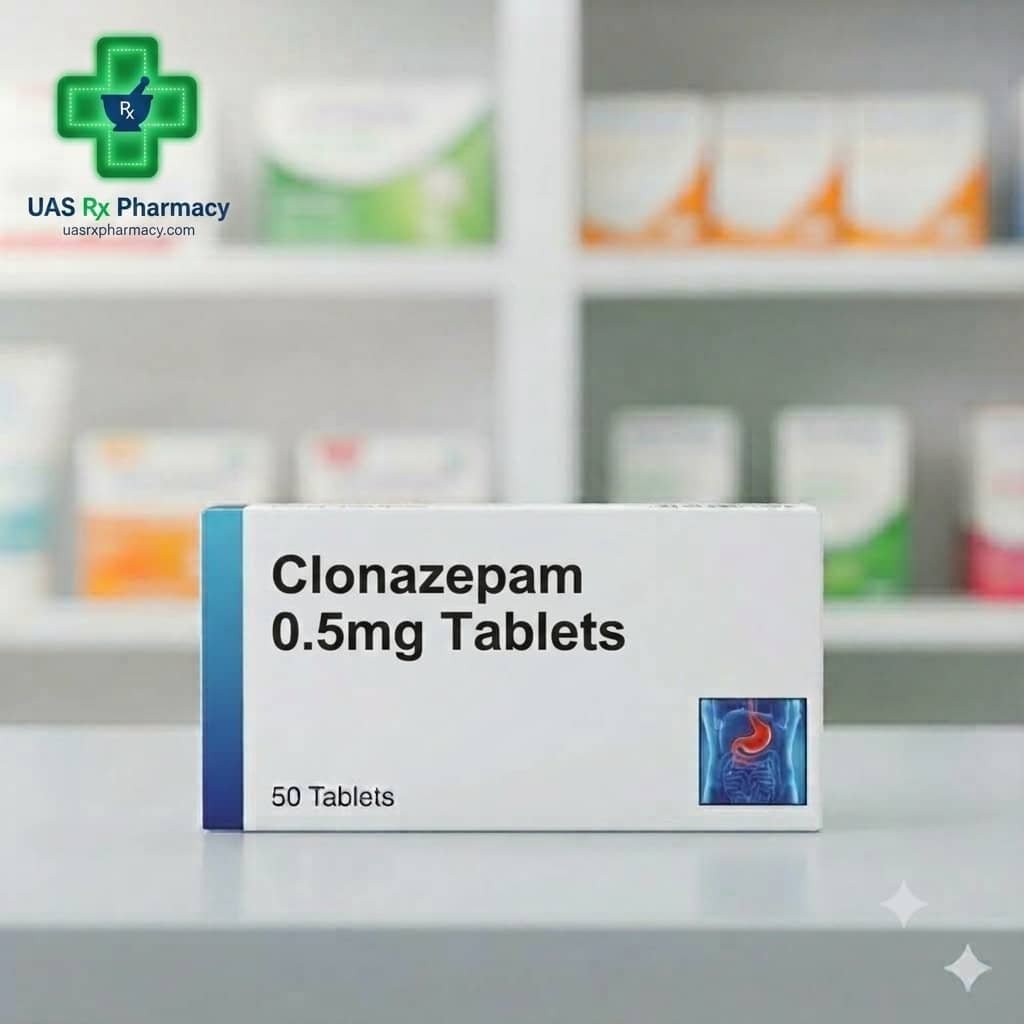
Buy Clonazepam 0.5mg
Price range: $299.00 through $1,089.00
Shipped From : United States to United States
Available Packages : 60Pills | 90Pills |180Pills | 360Pills
Delivery Time : 3-7 Business Days
Product Dosage : 0.5mg
Brand Name : Clonazepam
Generic Name : Klonopin
Deal of the Month : BONUS PILLS & FREE SHIPPING on 360 Pills and above.
Clonazepam 0.5mg is a prescription medication that belongs to the benzodiazepine class. It is widely used to treat seizure disorders, panic attacks, and anxiety. Known for its calming effects on the brain and central nervous system, Clonazepam 0.5mg is a low-strength dose, often used as a starting point or for patients requiring milder sedation and symptom control.
This medication is also sold under the brand name Klonopin and is considered a long-acting benzodiazepine, providing relief for up to 6–12 hours or more.
What Is Clonazepam 0.5mg Used For?
Doctors prescribe Clonazepam 0.5mg for:
-
Seizure disorders such as absence seizures or Lennox-Gastaut syndrome
-
Panic disorder, with or without agoraphobia
-
Generalized anxiety disorder (GAD)
-
Sleep disturbances related to anxiety (off-label)
-
Movement disorders such as restless leg syndrome or tics (off-label)
Due to its lower dosage, Clonazepam 0.5mg is especially helpful for new users, elderly patients, or individuals with mild to moderate symptoms.
How It Works
Clonazepam enhances the activity of GABA (gamma-aminobutyric acid)—a neurotransmitter that slows down brain activity. By increasing GABA levels, Clonazepam reduces excessive nerve signals, which helps calm the mind, control seizures, and reduce panic or anxiety.
Its slow onset and long half-life make it suitable for patients who need steady, all-day relief rather than quick, short bursts.
Dosage and Administration
The 0.5mg strength is typically the starting dose and may be adjusted according to the patient’s response.
Common dosing instructions:
-
Seizures: Initial dose is 0.5mg taken twice daily, gradually increased under medical supervision.
-
Panic disorder/anxiety: Start with 0.25mg to 0.5mg twice daily, with possible adjustments.
-
Can be taken with or without food
-
Always swallow the tablet whole with water—do not crush or chew
It is important to take Clonazepam exactly as prescribed and never abruptly stop, as this can trigger withdrawal symptoms.
Common Side Effects
Most people tolerate Clonazepam 0.5mg well, but some side effects may occur, especially during the first few days:
-
Drowsiness or sleepiness
-
Dizziness or lightheadedness
-
Fatigue
-
Coordination problems
-
Blurred vision
-
Mild memory impairment
These effects may subside with regular use. Let your doctor know if they persist or worsen.
Serious Risks and Warnings
While Clonazepam is effective, it carries several serious risks, especially with long-term or improper use:
-
Physical and psychological dependence
-
Withdrawal symptoms, including tremors, agitation, seizures, and rebound anxiety
-
Overdose risk, especially if combined with other CNS depressants like alcohol or opioids
-
Mood changes, depression, or suicidal thoughts (rare but serious)
-
Paradoxical effects, such as increased anxiety or aggression (especially in children or older adults)
Use caution and follow your doctor’s guidance closely.
Who Should Avoid Clonazepam 0.5mg?
Clonazepam may not be suitable for individuals who:
-
Have a history of substance abuse
-
Suffer from liver disease, glaucoma, or breathing disorders like sleep apnea
-
Are you pregnant (may cause birth defects) or breastfeeding
-
Have severe depression or suicidal tendencies
Older adults may be more sensitive to side effects such as sedation and unsteadiness.
Drug Interactions
Clonazepam 0.5mg may interact with:
-
Opioids (e.g., hydrocodone, morphine)
-
Alcohol
-
Other benzodiazepines or sleep medications
-
Antidepressants or antipsychotics
-
Anticonvulsants or mood stabilizers
Combining these may lead to excessive sedation, slowed breathing, or even coma in severe cases.
Clonazepam 0.5mg provides reliable, low-dose treatment for seizures, panic disorder, and anxiety, offering a calming effect without overwhelming sedation. Its lower strength makes it a good option for new patients or those who need a gentle therapeutic effect. As with all benzodiazepines, it must be used under careful medical supervision to avoid dependence and ensure safety.
Frequently Asked Questions (FAQs)
What makes Clonazepam 0.5mg a “low-strength” dose?
The 0.5mg tablet is frequently used as a starting dose for new users, elderly patients, or those with mild to moderate symptoms. It allows doctors to monitor the patient’s response before making any gradual adjustments to the treatment plan.
How long do the effects of Clonazepam last?
Clonazepam is a long-acting benzodiazepine. Unlike shorter-acting medications, one dose can provide therapeutic relief for anywhere from 6 to 12 hours or longer, making it suitable for patients who need consistent symptom control throughout the day.
Can I stop taking Clonazepam 0.5mg if I feel better?
No. You should never abruptly stop taking this medication. Doing so can trigger serious withdrawal symptoms, including tremors, agitation, and even seizures. Always consult your doctor for a supervised tapering schedule.
What should I avoid while taking this medication?
You must strictly avoid alcohol and opioids, as the combination can lead to life-threatening respiratory depression or coma. Additionally, avoid driving or operating heavy machinery until you know how the 0.5mg dose affects your coordination and alertness.
Does Clonazepam work immediately for panic attacks?
While it is effective for panic disorder, Clonazepam has a slower onset compared to some other benzodiazepines. It is better suited for providing steady, long-term stabilization rather than instant, short-burst relief.
Who should be extra cautious when using Clonazepam?
Elderly patients should be cautious as they may be more sensitive to sedation and unsteadiness. It is also generally avoided by individuals with a history of substance abuse, liver disease, narrow-angle glaucoma, or those who are pregnant.
| Quantity | 60Pills, 90Pills, 180Pills, 360Pills |
|---|
1 review for Buy Clonazepam 0.5mg
Add a review
Related products


Mikel –
They changed the ordering method. It was a lot easier to compare all the options. You also receive an order confirmation now, so cool.