
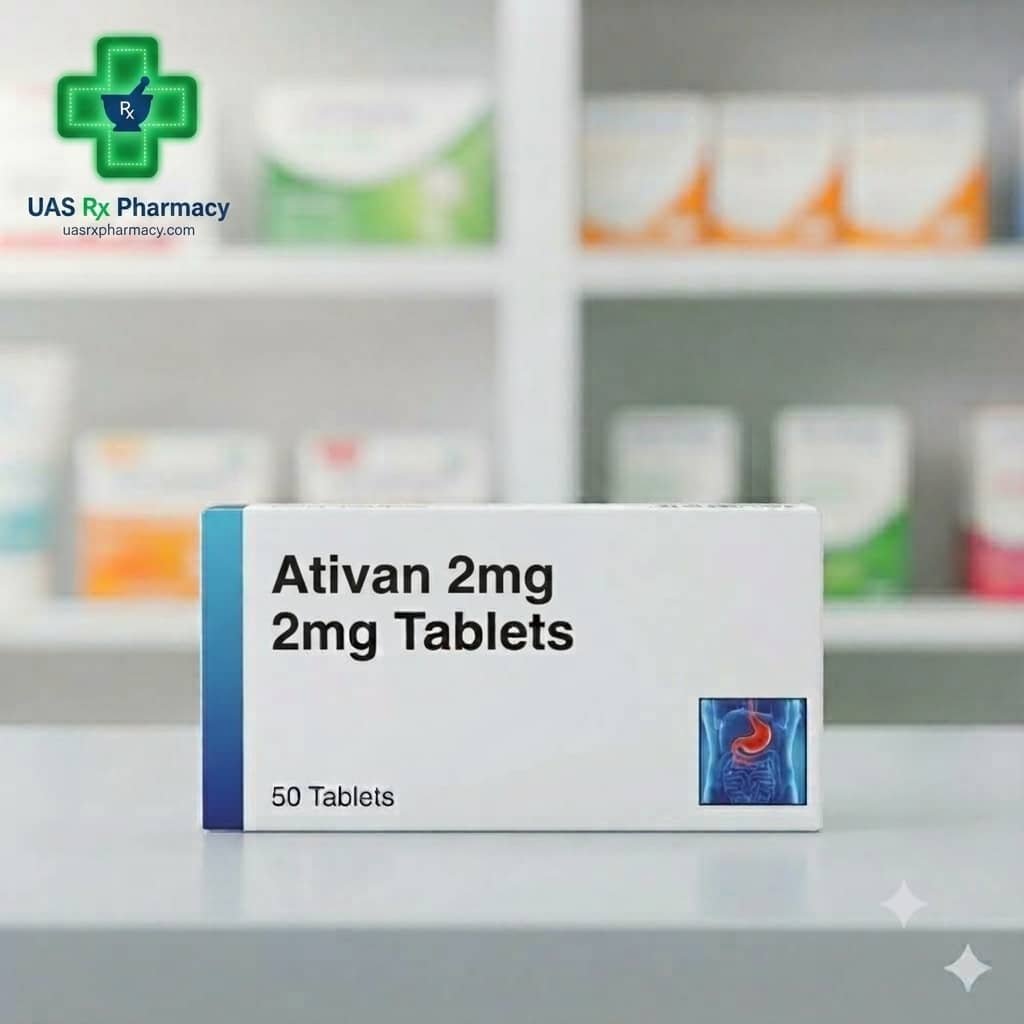
Buy Ativan 2mg
Price range: $340.00 through $1,049.00
Shipped From : United States to United States
Available Packages : 60Pills | 90Pills | 180Pills | 360Pills
Delivery Time : 3-7 Business Days
Product Dosage : 2mg
Brand Name : Ativan
Generic Name : Lorazepam
Deal of the Month : BONUS PILLS & FREE SHIPPING on 360 Pills and above.
Ativan 2mg is a potent prescription benzodiazepine (Lorazepam) utilized for the short-term relief of severe anxiety, acute panic disorders, and seizure control. By enhancing the calming effects of GABA in the brain, Ativan 2mg provides rapid sedation and muscle relaxation, making it a critical tool for managing intense emotional or neurological distress.
How Ativan 2mg Works
Ativan 2mg works by targeting the brain’s “natural tranquilizer,” a neurotransmitter called GABA. When you feel anxious or overstimulated, your neurons are firing too rapidly. Ativan binds to specific receptors to amplify GABA’s inhibitory signals, effectively slowing down the nervous system.
Ativan 2mg (Lorazepam): A Powerful Medication for Anxiety and More
Ativan 2mg is a prescription medication that contains lorazepam, a drug belonging to the benzodiazepine class. It is widely used to manage anxiety disorders, panic attacks, insomnia, and seizures. Lorazepam works by calming the brain and nerves, producing a sedative and anxiolytic (anti-anxiety) effect.
Ativan 2mg is considered a high dose and is usually prescribed to patients who have built up a tolerance to lower strengths (like 0.5mg or 1mg) or who require more substantial relief due to severe symptoms.
What Is Ativan 2mg Used For?
Doctors may prescribe Ativan 2mg for a range of conditions, including:
-
Generalized anxiety disorder (GAD)
-
Severe panic attacks
-
Acute agitation or restlessness
-
Insomnia related to anxiety
-
Pre-surgical sedation
-
Alcohol withdrawal symptoms
-
Short-term seizure control (e.g., status epilepticus)
Because of its rapid and calming effects, Ativan 2mg is often used in acute or emergency situations.
How Ativan Works
Ativan enhances the effect of gamma-aminobutyric acid (GABA), a neurotransmitter that slows down brain activity. By amplifying GABA’s action, Ativan reduces excessive brain activity, helping to ease anxiety, induce sleep, prevent seizures, and relax tense muscles.
The onset of action typically occurs within 30 to 60 minutes, with effects lasting 6 to 8 hours or longer, depending on the individual.
Dosage and Administration
Ativan 2mg is usually administered orally, but in hospital settings, it can be given intravenously (IV) or intramuscularly (IM).
Dosage guidelines:
-
Anxiety disorders: Typically 2–6mg per day in divided doses
-
Insomnia due to anxiety: 2mg at bedtime
-
Seizures or acute episodes: May be given as a single dose under supervision
-
Always follow the exact dose prescribed by your doctor
Take with or without food, but avoid alcohol or other sedatives while using Ativan.
Common Side Effects
Most people tolerate Ativan well, but some may experience:
-
Drowsiness or sedation
-
Dizziness or unsteadiness
-
Fatigue
-
Confusion (especially in elderly patients)
-
Blurred vision
-
Muscle weakness
These side effects may be more pronounced at the 2mg dosage, especially in people not previously exposed to benzodiazepines.
Serious Risks and Warnings
Ativan 2mg carries serious risks, particularly when misused or combined with other central nervous system depressants:
-
Physical and psychological dependence with prolonged use
-
Withdrawal symptoms if stopped abruptly (e.g., anxiety, tremors, seizures)
-
Respiratory depression (slowed breathing) when mixed with opioids or alcohol
-
Memory loss, confusion, or unusual behavior
-
Paradoxical reactions (e.g., aggression, irritability, insomnia)
Never stop Ativan suddenly—especially if you’ve been using it for more than a few weeks. Tapering under a doctor’s supervision is crucial.
Precautions and Warnings
Before using Ativan 2mg, inform your doctor if you have:
-
History of substance or alcohol abuse
-
Breathing problems (e.g., COPD, sleep apnea)
-
Liver or kidney disease
-
Depression or suicidal thoughts
-
History of seizures or head injury
Avoid alcohol, operating machinery, or driving while on this medication, as it can impair thinking and coordination.
Drug Interactions
Ativan may interact with:
-
Opioid painkillers (e.g., oxycodone, hydrocodone)
-
Other benzodiazepines
-
Sleeping pills and muscle relaxants
-
Antidepressants or antipsychotics
-
Antihistamines
These combinations may increase the risk of sedation, coma, or death. Always provide your doctor with a full list of medications and supplements you’re taking.
Addiction and Legal Status
Ativan 2mg is a Schedule IV controlled substance due to its potential for abuse and dependence, especially at higher doses. It should be used only by the person for whom it is prescribed and never shared.
Frequently Asked Questions (FAQs)
1. Is 2mg of Ativan considered a high dose?
Yes. While Ativan doses often start at 0.5mg or 1mg, the Ativan 2mg tablet is a higher strength typically reserved for severe symptoms, hospital settings, or patients who have developed a clinical tolerance to lower doses. It should be used with extra caution due to increased sedation.
2. How quickly will I feel the effects?
When taken orally, most patients begin to feel a reduction in anxiety or a sedative effect within 30 to 60 minutes. The peak effect usually occurs around 2 hours after ingestion.
3. Can I take Ativan 2mg every day for long-term anxiety?
Generally, no. Ativan is intended for short-term use (usually 2–4 weeks). Long-term daily use significantly increases the risk of physical dependence and addiction. For chronic anxiety, doctors usually transition patients to SSRIs or therapy.
4. What happens if I stop taking Ativan 2mg suddenly?
Abruptly stopping a high dose like 2mg can be dangerous. It can cause severe withdrawal symptoms, including rebound anxiety, tremors, hallucinations, and life-threatening seizures. Always taper your dose under a doctor’s supervision.
5. Why is there a “Black Box Warning” regarding opioids?
Combining Ativan 2mg with opioid pain medications (like Oxycodone) or alcohol creates a synergistic effect that can cause the brain to “forget” to breathe. This leads to fatal respiratory depression, coma, or death.
| Quantity | 60Pills, 90Pills, 180Pills, 360Pills |
|---|
1 review for Buy Ativan 2mg
Add a review
Related products
Bobb –
Maybe it’s because I have dealt with them for several years and they have my history on file, but their website is super easy to use; they are incredibly quick to fill my orders and the people (if you need to talk on the phone) are absolutely wonderful.
I wholeheartedly recommend this pharmacy.