

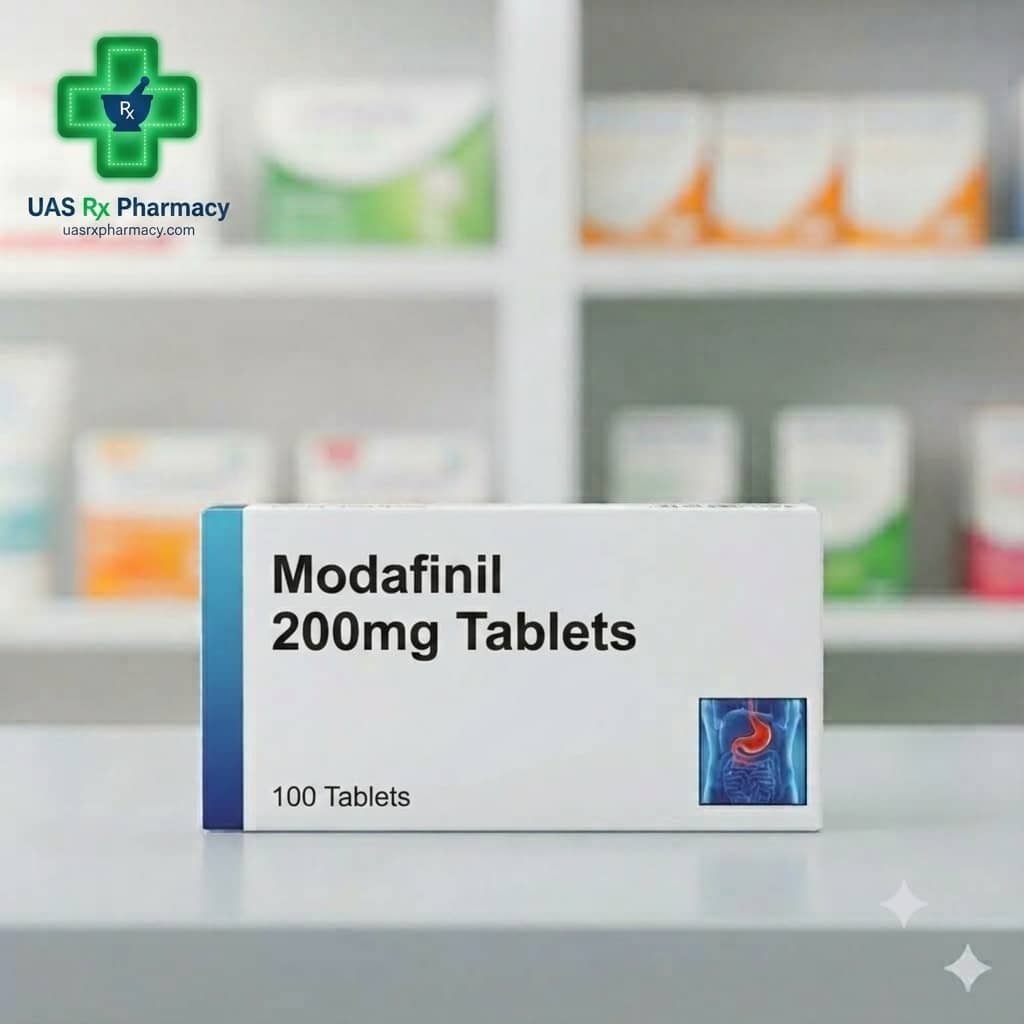
Buy Modafinil 200mg
Price range: $189.00 through $659.00
Modafinil 200mg is a powerful eugeroic, or wakefulness-promoting agent, designed to combat daytime fatigue associated with various sleep disorders. It helps enhance alertness without the typical jitteriness or “high” often associated with stimulants, making it a valuable tool for those seeking to regain control of their wakefulness.
Modafinil 200mg is a prescription drug and is mainly employed to induce wakefulness in individuals with sleep disorders like narcolepsy, obstructive sleep apnea (OSA), and shift work sleep disorder (SWSD). It is a eugeroic or wakefulness-promoting agent, and available under trade names such as Provigil. In contrast to other stimulants, Modafinil does not induce a “high” or excessive jitteriness, so it is the drug of choice for those needing daytime wakefulness without excess stimulation.
What Is Modafinil 200mg Used For?
Modafinil 200mg is prescribed for the following: Narcolepsy – to decrease occurrences of excessive daytime sleepiness Obstructive Sleep Apnea (OSA) – to enhance alertness among patients with OSA who use CPAP machines but continue to feel daytime sleepiness Shift Work Sleep Disorder (SWSD) – for night shift or non-traditional workers who have difficulty staying alert during working hours. Off-label, Modafinil is also prescribed for: ADHD (as a second choice to amphetamines) Fatigue due to multiple sclerosis or depression Cognitive improvement (albeit not formally approved for this purpose)
How Modafinil Works
Modafinil’s mechanism of action is not fully understood, but it is thought to involve the modulation of multiple neurotransmitters in the brain, including dopamine, norepinephrine, histamine, and orexin. These chemicals play a crucial role in maintaining wakefulness, promoting motivation, and regulating mood. Modafinil induces a feeling of alertness without the intense stimulation or amphetamine-like addictive effects typical of amphetamines. Modafinil does not disrupt natural sleep patterns when used appropriately. Dosage and Administration Modafinil 200mg is typically taken once daily. The dosage is based on the condition:
- Narcolepsy/OSA: 200mg in the morning
- SWSD: 200mg approximately one hour before the commencement of the work shift
- It may be taken with or without meals, but always with water.
Do not take Modafinil late in the day, as it could disrupt nighttime sleep. Never exceed the prescribed dose. Taking more than directed increases the risk of side effects without improving effectiveness. Common Side Effects Modafinil is generally well-tolerated. However, some people may experience:
- Headache
- Nausea
- Dry mouth
- Anxiety or nervousness
- Insomnia
- Dizziness
- Diarrhea or indigestion
These side effects are usually mild and temporary.
- Serious Side Effects (Rare)
- Though uncommon, serious side effects may occur:
- Severe rash or allergic reactions (e.g., Stevens-Johnson syndrome)
- Chest pain or irregular heartbeat
- Mental health changes (aggression, hallucinations, mania)
- Shortness of breath
If any of these occur, get immediate medical help. Precautions and Warnings Before taking Modafinil, tell your doctor if you:
- Have heart disease or hypertension
- Have liver or kidney issues.
- Have a history of mental illness (e.g., depression, psychosis)
- Have a history of drug or alcohol abuse.
- Are you pregnant or breastfeeding?
Modafinil use during pregnancy is not advised unless necessary. Its safety in children under 17 years of age has not been determined. Drug Interactions Modafinil interacts with various medications, including:
- Hormonal birth control (decreases efficacy—use alternative contraception)
- Antidepressants (SSRIs, MAOIs)
- Blood thinners such as warfarin
- Anti-seizure drugs
- Stimulants or other wakefulness medications
Always provide a complete list of your medications to your healthcare provider to prevent harmful interactions.
Is Modafinil Addictive?
Modafinil carries a low risk of abuse, particularly when compared to conventional stimulants such as Adderall or Ritalin. Misuse or improper long-term use is, however, likely to result in dependence or psychological dependence, particularly among off-label users.
FAQs
- What is the difference between Modafinil 200mg and other stimulants?
Modafinil 200mg is a eugeroic, not a traditional stimulant. While it effectively promotes wakefulness, it generally doesn’t produce the same level of overstimulation, jitters, or risk of dependence that other stimulants like amphetamines do. This makes it a preferred choice for individuals who require sustained alertness without the undesirable side effects of stimulants.
- Can I use Modafinil 200mg without a prescription?
No, Modafinil 200mg is a prescription medication. It should only be used under the guidance of a qualified healthcare professional who can assess your individual needs and determine if it’s the right treatment for you. Using it without a prescription can lead to safety risks and potential complications.
- What are the common side effects of Modafinil 200mg?
Common side effects of Modafinil 200mg include headache, nausea, dry mouth, anxiety, insomnia, dizziness, diarrhea, or indigestion. These effects are usually mild and temporary. If you experience any persistent or severe side effects, consult your doctor.
- Can I take Modafinil 200mg if I have underlying health conditions?
Before taking Modafinil 200mg, it’s crucial to inform your doctor about all your medical conditions, including heart disease, high blood pressure, liver or kidney issues, mental health conditions, or a history of drug or alcohol abuse. Certain conditions may affect how Modafinil 200mg works in your body and increase the risk of side effects.
- Are there any potential interactions with other medications?
Yes, Modafinil 200mg can interact with various medications, including hormonal birth control, antidepressants, blood thinners, anti-seizure drugs, and other stimulants. It’s essential to provide your healthcare provider with a complete list of your medications and supplements to prevent harmful interactions.
- Can Modafinil 200mg cause addiction?
While Modafinil 200mg has a lower risk of abuse compared to traditional stimulants, misuse or improper long-term use can potentially lead to dependence or psychological dependence. It’s important to use this medication exactly as prescribed by your doctor.
| Quantity | 60Pills, 90Pills, 180Pills, 360Pills |
|---|
1 review for Buy Modafinil 200mg
Add a review
Related products


Linda –
Have ordered from this online pharmacy multiple times for my mom, and am very satisfied. Ordering is easy and they are very professional. I am so grateful to have an affordable source for her medication!