
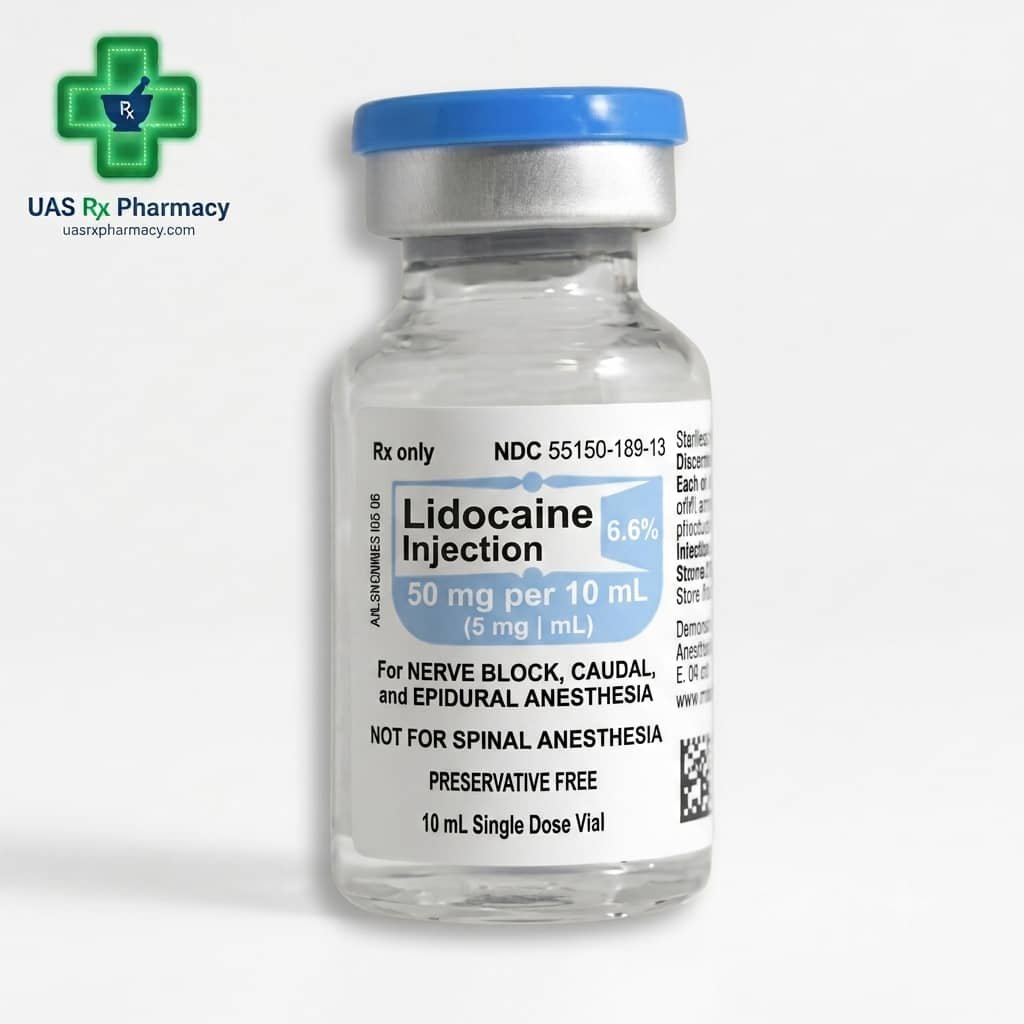
Lidocaine is a local anesthetic (numbing medication). It works by blocking nerve signals in your body. Buy Lidocaine injection Online Without Prescription.
Lidocaine injection is used to numb an area of your body to help reduce pain or discomfort caused by invasive medical procedures such as surgery, needle punctures, or insertion of a catheter or breathing tube.
Lidocaine injection is sometimes used to treat irregular heart rhythms that may signal a possible heart attack.
Lidocaine injection is also given in an epidural (spinal block) to reduce the discomfort of contractions during labor.
Lidocaine injection may also be used for purposes not listed in this medication guide.
What should I discuss with my healthcare provider before receiving lidocaine injection?
You should not receive this medicine if you are allergic to lidocaine injection or any other type of numbing medicine, or if you have:
- severe heart block;
- a heart rhythm disorder called Stokes-Adams syndrome (sudden slow heart beats that can cause you to faint); or
- a heart rhythm disorder called Wolff-Parkinson-White Syndrome (sudden fast heartbeats that can cause you to faint or become easily tired).
Tell your doctor if you have ever had:
- an allergy to corn products;
- liver disease;
- kidney disease;
- heart disease (unless you are being treated with lidocaine injection for a heart condition);
- coronary artery disease, circulation problems; or
- malignant hyperthermia.
It is not known whether this medicine will harm an unborn baby. Tell your doctor if you are pregnant.
It may not be safe to breast-feed while using this medicine. Ask your doctor about any risk.
How is lidocaine injection given?
A healthcare provider will give you this injection.
When used to treat heart rhythm problems, lidocaine is given as an infusion into a vein.
When used as a local anesthetic, lidocaine is injected through the skin directly into the body area to be numbed.
Your breathing, blood pressure, oxygen levels, and other vital signs will be watched closely while you are receiving lidocaine injection in a hospital setting.
If you are being treated for irregular heart rhythm, your heart rate will be constantly monitored using an electrocardiograph or ECG (sometimes called an EKG). This will help your doctor determine how long to treat you with lidocaine injection. Buy Lidocaine injection Online Without Prescription.
Frequently Asked Questions (FAQs)
How does Lidocaine work to reduce pain?
Lidocaine is a local anesthetic that works by temporarily blocking the nerve signals in a specific area of your body. This prevents the brain from receiving pain signals during invasive procedures like surgery or catheter insertion.
Can Lidocaine be used for heart conditions?
Yes. In a hospital setting, Lidocaine is sometimes administered via an intravenous (IV) infusion to treat serious irregular heart rhythms that may indicate a potential heart attack. During this treatment, a patient’s heart rate is constantly monitored via an ECG.
Who should avoid receiving a Lidocaine injection?
You should not receive this medication if you have a known allergy to lidocaine or other numbing agents. It is also contraindicated for individuals with severe heart block or specific heart rhythm disorders like Stokes-Adams syndrome and Wolff-Parkinson-White Syndrome.
What medical history should I disclose before treatment?
It is vital to tell your healthcare provider if you have a history of liver or kidney disease, circulation problems, coronary artery disease, or an allergy to corn products. You should also mention if you have ever experienced malignant hyperthermia.
Is Lidocaine injection safe during pregnancy or breastfeeding?
While Lidocaine is used in epidurals to reduce labor discomfort, its effects on an unborn baby or nursing infant in other contexts are not fully known. Always inform your doctor if you are pregnant or breastfeeding before receiving an injection.
How is the injection administered?
Administration depends on the purpose. For local numbing, it is injected directly through the skin into the target area. For heart rhythm issues, it is given as a slow infusion into a vein. In both cases, a healthcare professional must perform the procedure to monitor vital signs.


Reviews
There are no reviews yet.